
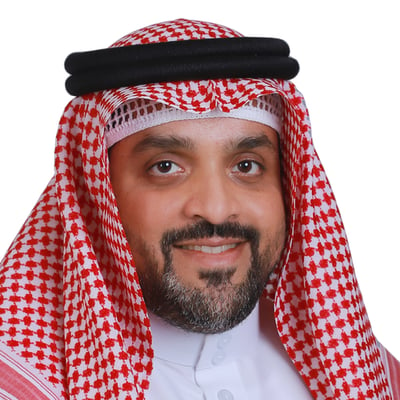
Hamza Bawazir
Secretary General
General Council for Islamic Banks & Financial Institutions
Hamza K. Bawazir is the Secretary General of the General Council for Islamic Banks and Financial Institutions (CIBAFI), bringing over 20 years of leadership experience in Islamic finance, Shariah governance and compliance, product development, risk management, corporate governance, and Islamic financial market development. Prior to joining CIBAFI, he served as Head of the Shariah Division at Saudi National Bank (SNB), where he led Shariah advisory, governance, development, and control functions across corporate, retail, treasury, and investment banking. He is also actively engaged in international Islamic finance standard-setting, serving as a Board Member of AAOIFI and contributing to the International Islamic Financial Market (IIFM). He holds the Certified Management Accountant (CMA) designation, an Executive MBA (EMBA), and bachelor’s degrees in Islamic Jurisprudence/Shariah and Business Administration.
Speaking at
-
1:55–2:35pmWed 26 AugForum StageIslamic Civilisation Centre (ICC)Open
Islamic Finance
Azimuth Dialogue 4: A $6 Trillion Corridor? The Industry Can't Yet Agree on Its Own Size
-
 Ahrorjon SadullaevMember of Islamic Finance Committee, Central Bank of Uzbekistan & Managing PartnerOrient Audit Group LLC
-
 Amir MerchantChief Executive OfficerSovereign Gulf Partners
-
 Hamza BawazirSecretary GeneralGeneral Council for Islamic Banks & Financial Institutions
-
 Mustafa AdilHead of Islamic FinanceLondon Stock Exchange Group
-
 Bakhrom JuraevDeputy Director, Department for Regulation of Credit Organizations & Head of the Thematic Project Office for Islamic Finance DevelopmentCentral Bank of Republic of UzbekistanModerator
About this session
Start with the number in the title. DinarStandard puts global Islamic finance assets at $5.99 trillion for 2024, heading to $9.72 trillion by 2029. For that same year, 2024, the IFSB - the industry's prudential standard-setter, working from regulators' own supervisory returns - puts them at $3.88 trillion. Same industry, same year, a gap of roughly $2.1 trillion. That is not a rounding error. It is a statement about what gets counted, what gets reported, and where the capital actually sits. What both agree on: sukuk outstanding crossed $1 trillion in 2025, and the growth is now coming from Africa and Central Asia. So - is there a corridor here, or a very good story? The panel sizes the flow and shows it’s working.
-

