
Wed 26 Aug1:15–1:55pmForum Stage
Azimuth Dialogue 3: Can You Code Shariah Compliance?
Add to calendar
About This Session
Code needs a specification. Shariah interpretation doesn't have one yet. AAOIFI's Shariah Standard No. 62 - which would force real legal transfer of assets to sukuk holders and kill guaranteed returns - has been in consultation since November 2023 and isn't final. AAOIFI's standards are adopted fully, partially or as guidance across roughly 21 jurisdictions; Malaysia, Saudi Arabia and Indonesia, between them about 68% of 2024 sukuk issuance, don't mandate them at all. Meanwhile the IFSB's 2026 report flags "hybrid risks" - Islamic products drifting close enough to conventional banking that the prudential frameworks no longer catch what's underneath. You cannot compile a rule that scholars haven't settled. So, what can be embedded in the infrastructure, and what has to stay human?
- When
- Wednesday 26 August1:15–1:55pm, Tashkent time
- Where
- Forum StageIslamic Civilisation Centre (ICC)
- Access
- Open
Speakers
-
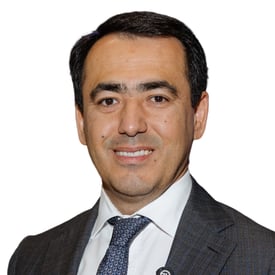
Bakhrom Numonov
Council Chairman
Association of Islamic Finance & Takaful
-
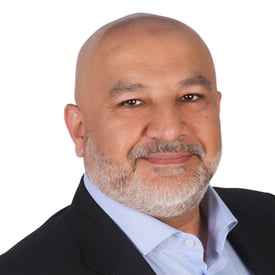
Farrukh Raza
Chairman
IFAAS Group
-
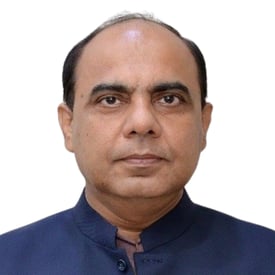
Ghulam Muhammad Abbasi
Executive Director - Islamic Finance Group
State Bank of Pakistan
-
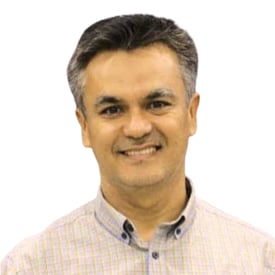
Jakhongir Imamnazarov
Founder
Islamic Business & Finance Ltd
-
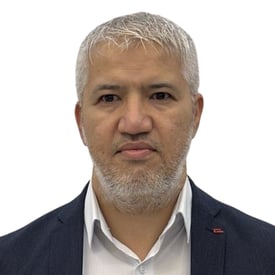
Khondamir Nusratkhujaev
Lead, Financial Control Department
IsDB
Moderator
More Islamic Finance Sessions
-
1:55–2:35pmWed 26 AugForum StageIslamic Civilisation Centre (ICC)Open
Islamic Finance
Azimuth Dialogue 4: A $6 Trillion Corridor? The Industry Can't Yet Agree on Its Own Size
-
 Ahrorjon SadullaevMember of Islamic Finance Committee, Central Bank of Uzbekistan & Managing PartnerOrient Audit Group LLC
-
 Amir MerchantChief Executive OfficerSovereign Gulf Partners
-
 Hamza BawazirSecretary GeneralGeneral Council for Islamic Banks & Financial Institutions
-
 Mustafa AdilHead of Islamic FinanceLondon Stock Exchange Group
-
 Bakhrom JuraevDeputy Director, Department for Regulation of Credit Organizations & Head of the Thematic Project Office for Islamic Finance DevelopmentCentral Bank of Republic of UzbekistanModerator
About this session
Start with the number in the title. DinarStandard puts global Islamic finance assets at $5.99 trillion for 2024, heading to $9.72 trillion by 2029. For that same year, 2024, the IFSB - the industry's prudential standard-setter, working from regulators' own supervisory returns - puts them at $3.88 trillion. Same industry, same year, a gap of roughly $2.1 trillion. That is not a rounding error. It is a statement about what gets counted, what gets reported, and where the capital actually sits. What both agree on: sukuk outstanding crossed $1 trillion in 2025, and the growth is now coming from Africa and Central Asia. So - is there a corridor here, or a very good story? The panel sizes the flow and shows it’s working.
-
-
4:00–5:30pmMon 24 AugPublic-Private DialoguesCAEx Roundtable Room 2Open
Islamic Finance
The Dual-Banking Blueprint - Scaling Sharia-Compliant Windows in Conventional Ecosystems
-
 Abdullo KurbanovCo-Founder of Alif Bank and Co-Founder & CEOAyan Capital
-
 Akram MackeenExecutive Vice President & Head, BaaS & Digital EcosystemMaybank Group Islamic Banking
-
 Dr. Ashraf Md HashimChairman, Shariah Advisory Council of Central Bank of MalaysiaBank Negara Malaysia
-
 Bakhrom NumonovCouncil ChairmanAssociation of Islamic Finance & Takaful
-
 Carrie SuenVice President, Head of Global Affairs & Strategic DevelopmentAnt International
-
 Dr. Dinesh TripathiFounder & Chief Executive OfficerWOW Finstack
-
 Nobuya KawasakiPresident DirectorPT. Bank Danamon Indonesia, Tbk
-
 Yuri PresniakovCounselCurtis LLC
-
 Navin SuriSenior AdvisorGlobal Finance & Technology Network (GFTN)Moderator
-
 Arjun Vir SinghPartner, Global Head of Fintech & Digital AssetsArthur D. LittleModerator
About this session
The global demand for Islamic finance is outstripping the technical capacity of conventional banking systems to support it. Early architectural and policy decisions - especially on tax neutrality and accounting segregation – will critically shape the scalability of Islamic finance institutions.
This session tackles the "plumbing" of dual-banking – focusing on how to build systems that are not only Shariah-compliant, but regionally interoperable and future-ready. As ecosystems in Central Asia and other regions (e.g. ASEAN) experience continued advancement in Digital Public Infrastructure (DPI) and focus on expanding Shariah-compliant capital markets, the discussion will also examine how digital rails can unlock unprecedented cross-border investment flows, trade efficiency and financial inclusion. -
-
9:30–10:10amWed 26 AugForum StageIslamic Civilisation Centre (ICC)Open
Islamic Finance
Setting the Azimuth: Why Tashkent, Why Now
-
 Sagari WhiteHead of Startups & Signature ProgrammesGlobal Finance & Technology Network (GFTN)
-
Navin SuriSenior AdvisorGlobal Finance & Technology Network (GFTN)
About this session
An azimuth is a bearing - the angle between true north and the direction you are pointed. The Silk Road wasn't a road and wasn't about silk - it was the world's first network for moving value and trust across dozens of borders with no single owner. Central Asia wasn't even a stop on it; Samarkand and Bukhara were the switchboard. And the technology that moved the money was Islamic finance; a sakk let a merchant put gold down in Baghdad and draw its value in Cairo, the same word that gives us both sukuk and cheque. Then the world went to sea and the centre of gravity moved off this map for five centuries. The day's argument: it's moving back - the cargo is now data and capital, the road is digital rails, and the charter was signed eight weeks ago. That's the global movement we're starting. In this room. Today.
-